MMA Camp Duration Guide
7-Day vs 14-Day MMA Camp in Georgia: Which Should You Choose?
Decide between a focused 7-day MMA camp and a 14-day immersion in Georgia, with training volume, recovery, price, and travel tradeoffs.
Planning note: generated dates, example schedules, prices, packages, inclusions, coach assignments and availability are not live inventory or a binding offer. Obtain a written final offer before paying or booking travel. Guide images are illustrative or archive media, and no selection, safety, training or performance outcome is promised.
Quick answer
Choose 7 days if you want a focused training week, a first camp test, or a compact trip around work.
Choose 14 days if you want more adaptation time, a less-rushed long-haul trip, and a fuller training and recovery rhythm.
Beginners and athletes returning from injury should usually start with the format that lets them train consistently, not the one that sounds most intense.
Short format
7 focused training days
Deep format
14-day immersion
7-day planning rates
EUR 990 shared / EUR 1190 private
14-day planning rates
EUR 1980 shared / EUR 2380 private (+EUR 200/week; +EUR 400 total)
Quick comparison
The 7-day and 14-day choice is not only a budget question. It changes how the week feels, how fast you need to absorb coaching, and how much recovery room you have between harder sessions.
A 7-day camp is direct. You arrive, settle quickly, train with a clear goal, and leave with specific corrections to take home.
A 14-day camp is more like a short immersion. The first week shows coaches how you move, where you compensate, and how you respond to intensity. The second week gives those corrections more time to become usable.
7-day module
One focused training week with a clear goal and fast feedback.
Best for first-time camp visitors, busy athletes, and budget-led trips.
14-day module
Two connected weeks with more repetition, recovery rhythm, and adaptation.
Best for long-haul travelers, active hobbyists, fighters, and teams.
Monthly start
Generated date choices are for planning, not confirmed events.
Request written date confirmation before booking flights.
Why week one and week two feel different
Week one is often diagnostic. You are learning the facility, the training rhythm, the coaches, your partners, and how your body handles the daily load.
That first week can still be valuable, especially for athletes who arrive with one or two clear goals. You can sharpen entries, improve defensive habits, get cleaner pad feedback, or test how your grappling holds up in a different room.
Week two is where many athletes become easier to coach. The nervous energy drops, the daily routine is familiar, and technical corrections get repeated while you are tired enough for honest habits to appear.
If your goal is a deep change in wrestling reactions, striking defense, clinch comfort, or MMA transitions, 14 days gives the work more room.
Recovery and injury risk
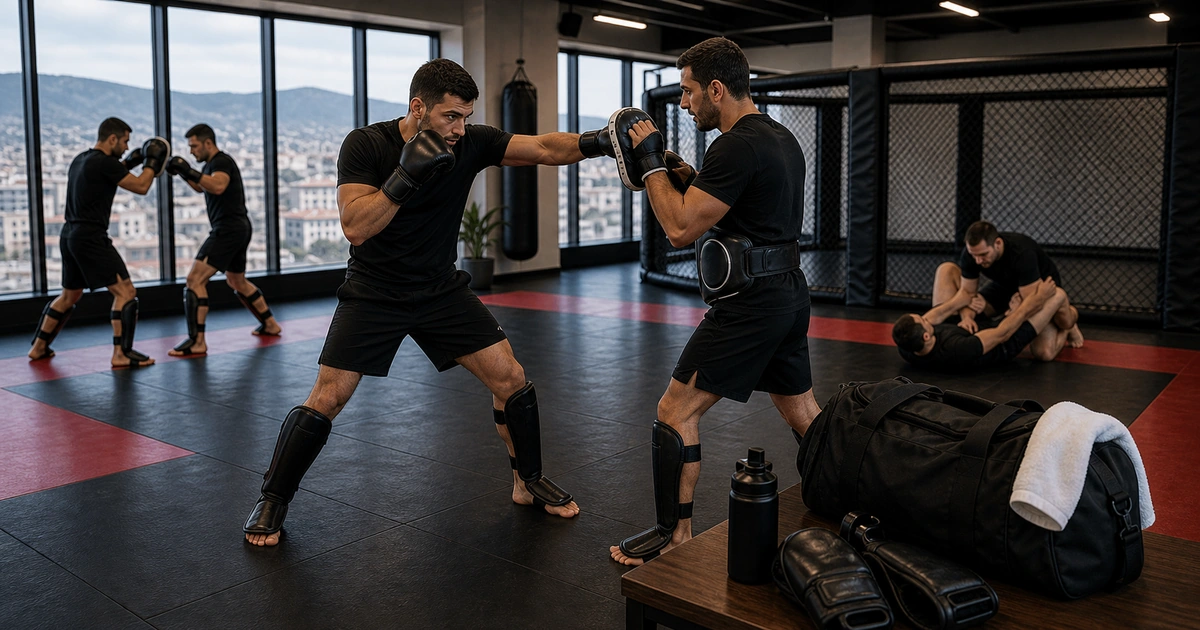
More days do not automatically mean better training. If you are not prepared for daily combat-sport work, a longer camp can expose weak recovery habits quickly.
For 7 days, the main risk is trying to prove yourself too early. Athletes often arrive excited and push the first sessions harder than needed.
For 14 days, the risk is cumulative: small aches, poor sleep, dehydration, and under-eating can build into a bad second week.
The better approach is to treat the camp as coached training, not a toughness contest. Use the appropriate private channel to communicate relevant health limitations, control sparring intensity, and protect sleep so the later sessions are still productive.
Cost and travel tradeoffs
Published planning rates are EUR 990 shared and EUR 1190 private for 7 days, and EUR 1980 shared and EUR 2380 private for 14 days. A written quote must confirm the room, inclusions, total, currency, and terms.
A proposed 14-day configuration may extend accommodation, breakfast service, and training across a second week, subject to the written offer. Lunch and dinner remain excluded.
For nearby travelers, 7 days can be the practical choice. For long-haul travelers, 14 days often makes the trip feel less rushed because arrival stress and jet lag are spread across more training days.
If you are choosing private accommodation, the question is recovery. If better sleep makes you train better, the higher room price can be part of the training decision, not a luxury add-on.

Recommendation by athlete type
Beginners should choose 7 days if this is their first serious camp or if they are unsure how daily sessions will feel. A committed beginner can learn a lot in one week without overreaching.
Active hobbyists can choose either format. Pick 7 days for a tight schedule and 14 days if you want the training to feel less rushed.
Amateur fighters and competitors often benefit from 14 days when the calendar allows it, especially if the camp is part of a wider preparation block.
Teams should usually think in 14-day terms when the goal is group development, shared standards, and enough time for coaches to work across multiple athletes.
Still split between 7 and 14 days?
Send your level, travel distance, and main training goal. Do not put health data in the form notes; ask for an appropriate private channel if needed.
Ask about availabilityRelated Guides
Ready to request a written camp proposal?
Choose a preferred planning date and configuration, then send your level and travel preferences. Wait for written dates, availability, coaches, timetable, inclusions, price and terms before booking travel.
Camp Planning FAQ
Is 7 days enough for an MMA camp?
Yes. Seven days is enough for a focused training week if you arrive prepared and keep the goal specific.
Who should choose a 14-day MMA camp?
Choose 14 days if you want more adaptation time, are traveling far, are preparing for competition, or want the second week for deeper repetition.
Is 14 days too much for beginners?
It can be too much for unprepared beginners. Committed beginners with good baseline fitness can consider it, but many should test a 7-day block first.
Do both options start on the same monthly dates?
The site shows both durations against generated first-Tuesday planning choices. Neither the dates nor either duration is confirmed until provided in writing.